By PinkBazaar.in | October 2025
The Indian fashion industry is undergoing a digital renaissance. From AI-powered design assistants to virtual fashion shows in the metaverse, technology is reshaping how designers create, sell, and connect with consumers. What was once futuristic is now a fast-moving reality — Generative AI and the Metaverse have entered the fashion design space in India, blending creativity with computation like never before.
🧵 The New Digital Stitch: Generative AI in Fashion
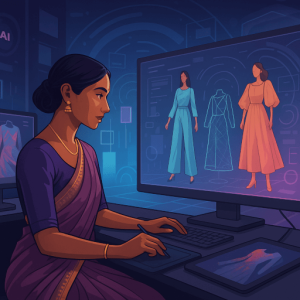
Generative AI — algorithms capable of creating original designs, images, and patterns — is transforming the fashion creation process. Indian designers and startups are leveraging these tools to:
-
Design Faster & Smarter:
Tools like Midjourney, DALL·E, and Runway ML help designers visualize new silhouettes, fabric patterns, and textures in seconds. Instead of sketching by hand, designers can prompt the AI with words like “silk saree with geometric embroidery and pastel gradients” — and get multiple unique versions instantly. -
Personalized Fashion Recommendations:
E-commerce platforms like Myntra, Ajio, and Tata Cliq Luxury are already experimenting with AI-driven personalization, recommending looks based on browsing behavior, skin tone, and occasion. -
AI Fabric Innovation:
Textile innovators in Surat and Tiruppur are using machine learning to develop eco-efficient fabrics, predicting which blends can deliver durability, colorfastness, and sustainability with lower energy use. -
Cost & Waste Reduction:
AI simulations reduce the need for physical prototypes. Virtual try-ons and 3D rendering tools help brands cut fabric wastage by nearly 30%, aligning with the industry’s growing sustainability goals.
🌐 Enter the Metaverse: India’s Virtual Fashion Runways
If AI is transforming design, the Metaverse is revolutionizing presentation and engagement. Fashion houses are stepping into virtual worlds to launch collections, host shows, and sell digital wearables.
-
Virtual Fashion Weeks:
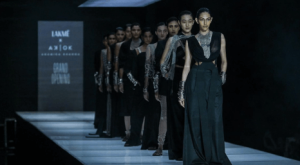
India’s fashion councils are exploring Metaverse-based fashion events where designers showcase 3D outfits on digital avatars. Lakmé Fashion Week 2025 has even hinted at an “extended reality” showcase powered by Meta and Unreal Engine. -
Digital Avatars & Virtual Try-Ons:
Brands like FableStreet, Anamika Khanna, and House of Masaba are experimenting with 3D fitting rooms — allowing customers to try outfits virtually using body scans or selfies. -
NFT Fashion & Digital Collectibles:
Luxury designers are releasing limited-edition NFT garments that can be worn by avatars in metaverse spaces like Decentraland or Roblox. Some NFT drops even offer dual ownership — a digital outfit for your avatar and a real-world version shipped to your doorstep. -
Virtual Stores & Immersive Shopping:
Imagine walking through a 3D Pink Bazaar boutique in the metaverse — exploring racks of virtual sarees, clicking on a design, and ordering the real version. This omnichannel retail future is already being tested by global players, and Indian brands are fast catching up.
💡 The Indian Edge: Tradition Meets Tech
India’s fashion ecosystem is uniquely positioned for this digital shift. The country’s rich textile heritage provides a creative playground for AI-driven experimentation, while its booming youth population — over 65% under 35 years old — ensures rapid adoption of immersive experiences.
Emerging Indian startups like StyleDotAI, ZMO.AI, and BespokeVerse are combining generative AI and 3D modeling to help designers visualize collections, predict trends, and manage virtual supply chains.
“AI doesn’t replace creativity — it expands it,” says a Delhi-based designer using AI-assisted sketching. “We can focus more on storytelling while technology handles repetition.”
⚙️ Challenges on the Runway
Despite the excitement, the fashion tech revolution faces hurdles:
-
Data Bias & Originality: AI models sometimes reproduce patterns from existing works, creating copyright concerns.
-
High Entry Costs: Small designers struggle to afford premium AI and 3D tools.
-
Digital Skill Gap: Many traditional artisans lack exposure to these technologies.
However, with government-backed initiatives under “Digital India” and new design curriculums introducing AI + Fashion modules, the gap is slowly narrowing.
🔮 The Future: Hybrid Fashion Ecosystem
The next five years could see:
-
AI-assisted tailoring — where customers upload measurements and get custom fits generated instantly.
-
Digital twin collections — every physical garment will have a virtual counterpart.
-
Virtual influencer collaborations — Indian brands partnering with AI avatars to promote collections.
By 2030, experts predict that over 40% of fashion design in India will involve some AI-assisted component, and virtual fashion sales could cross $1.2 billion.
✨ Final Takeaway
Generative AI and the Metaverse are no longer buzzwords — they’re transforming India’s fashion identity. From eco-conscious design algorithms to digital saree launches in the metaverse, the boundaries of creativity are dissolving.
For Indian women and designers alike, this is a thrilling era: where imagination meets innovation, and couture meets code.