By PinkBazaar.in | October 2025
India’s new Goods and Services Tax (GST) structure has sent ripples through the country’s fashion retail market — and global brands are feeling the pinch the most.
While the government aims to simplify taxation and boost local manufacturing, the new dual-rate system for apparel has created a divide between mass-market and premium fashion, forcing global brands to rethink pricing, sourcing, and sales strategies.
🧾 The New GST Rule: What Changed
Under the revised GST regime, apparel is now taxed as follows:
-
👕 Garments priced below ₹2,500 – 5% GST (down from 12%)
-
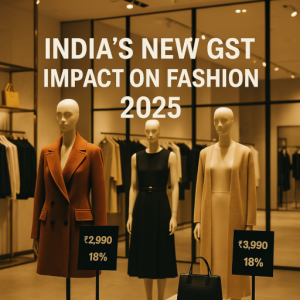
👔 Garments priced above ₹2,500 – 18% GST (up from 12%)
This shift means affordable clothing becomes cheaper for the average consumer — but premium and imported brands now pay significantly more tax, pushing up final retail prices.
The policy took effect in September 2025 and was framed to encourage consumption of Indian-made products while discouraging excessive imports and luxury spending.
🌍 Global Brands Caught in the Crossfire
Luxury and mid-premium brands like Zara, H&M, Mango, Calvin Klein, and Levi’s are among those hit hardest.
These brands rely heavily on imports, and most of their products are priced well above ₹2,500 — meaning they now face an 18% tax load, which either:
-
Eats into their profit margins, or
-
Forces them to increase retail prices.
“We are evaluating our pricing strategy. The new structure impacts our best-selling ranges that sit in the ₹3,000–₹5,000 bracket,” said an executive from a European fashion label operating in India.
📉 The Market Impact
-
Premium Segment Slowdown
Retailers report a dip in footfall for high-value apparel since the new GST took effect. Many customers are shifting toward mid-range or Indian alternatives. -
Pressure on Margins
Imported apparel brands already pay higher logistics and customs duties. The additional GST now compresses their margins even further. -
Shift Toward Local Sourcing
Some international brands are exploring “Make in India” partnerships to reduce import costs and fall under lower tax brackets. -
Rise of Affordable Fashion
Domestic brands such as Reliance Trends, FBB, V-Mart, and Baazar Style Retail are benefiting from the new rates — offering trend-driven products at competitive prices.
🪡 Indian Fashion Industry Response
The move has sparked debate among Indian designers and manufacturers.
While local fashion houses welcome the push for domestic consumption, they also caution that premium buyers might curb spending, hurting overall retail sentiment in the short term.
“The intent to promote Indian textiles is good, but fashion is global. A higher tax on imported apparel could limit variety and innovation,” said designer Ritu Kumar in a recent interview.
On the other hand, Swadeshi and sustainable brands see this as an opportunity to highlight their ethical and indigenous craftsmanship.
🇮🇳 Government’s Rationale
The Ministry of Finance and the Ministry of Textiles jointly defended the reform, stating it aligns with India’s broader “Make in India” and “Vocal for Local” vision.
By rewarding local production and reducing taxes on affordable garments, the government expects:
-
Boosted domestic textile sales
-
Reduced import dependency
-
More jobs in the garment manufacturing sector
💼 The Road Ahead for Global Brands
To remain competitive, foreign fashion houses are likely to adapt by:
-
Local Manufacturing Tie-Ups – Brands like Uniqlo and H&M are already exploring Indian manufacturing hubs in Gujarat and Tamil Nadu.
-
Product Segmentation – Offering smaller or simplified product lines under ₹2,500 to fall under the 5% GST bracket.
-
Collaborations with Indian Designers – Creating hybrid lines that blend global aesthetics with local materials and pricing.
-
Expanding E-Commerce Focus – Using direct-to-consumer online models to reduce store overheads and offer discounts despite higher taxes.
📊 The Bigger Picture
India’s fashion market — valued at $110 billion in 2025 — remains one of the most promising globally. While the short-term impact of the tax change may slow luxury sales, it could strengthen the local ecosystem and push brands to manufacture and innovate within India.
In essence, the government is nudging the fashion industry to evolve from import-led to India-led.
✨ Final Takeaway
The new GST regime is a game-changer for India’s apparel sector. While it challenges international brands, it opens new doors for domestic fashion labels, local artisans, and sustainable fashion movements.
For global players, the message is clear: to thrive in India, think local — not just sell local.
Tags:
#FashionBusiness #GSTIndia #GlobalBrands #MakeInIndia #IndianFashion #PinkBazaarNews #RetailTrends2025